Pages

Sunday, November 27, 2011

3 Reasons to Do Comedy

I love directing all types of material but I want to give you the three main reasons you should start out with comedy.

Still from Woody Allen's "Husbands & Wives"
1. Comedy is forgiving
    When people want to watch comedy they want to laugh. Period. They are prepared for stupidity and are not there to watch and judge. This works immensely in your favor. The bar isn’t lowered but the audience is welcoming. They are more willing to look past your bad lighting, the same three actors in all minor parts, bad sound, and muddled visuals. As long as you deliver the one thing they are there for. The laugh. This isn’t an excuse for all those problems but at least when you are starting out they won’t hurt you.
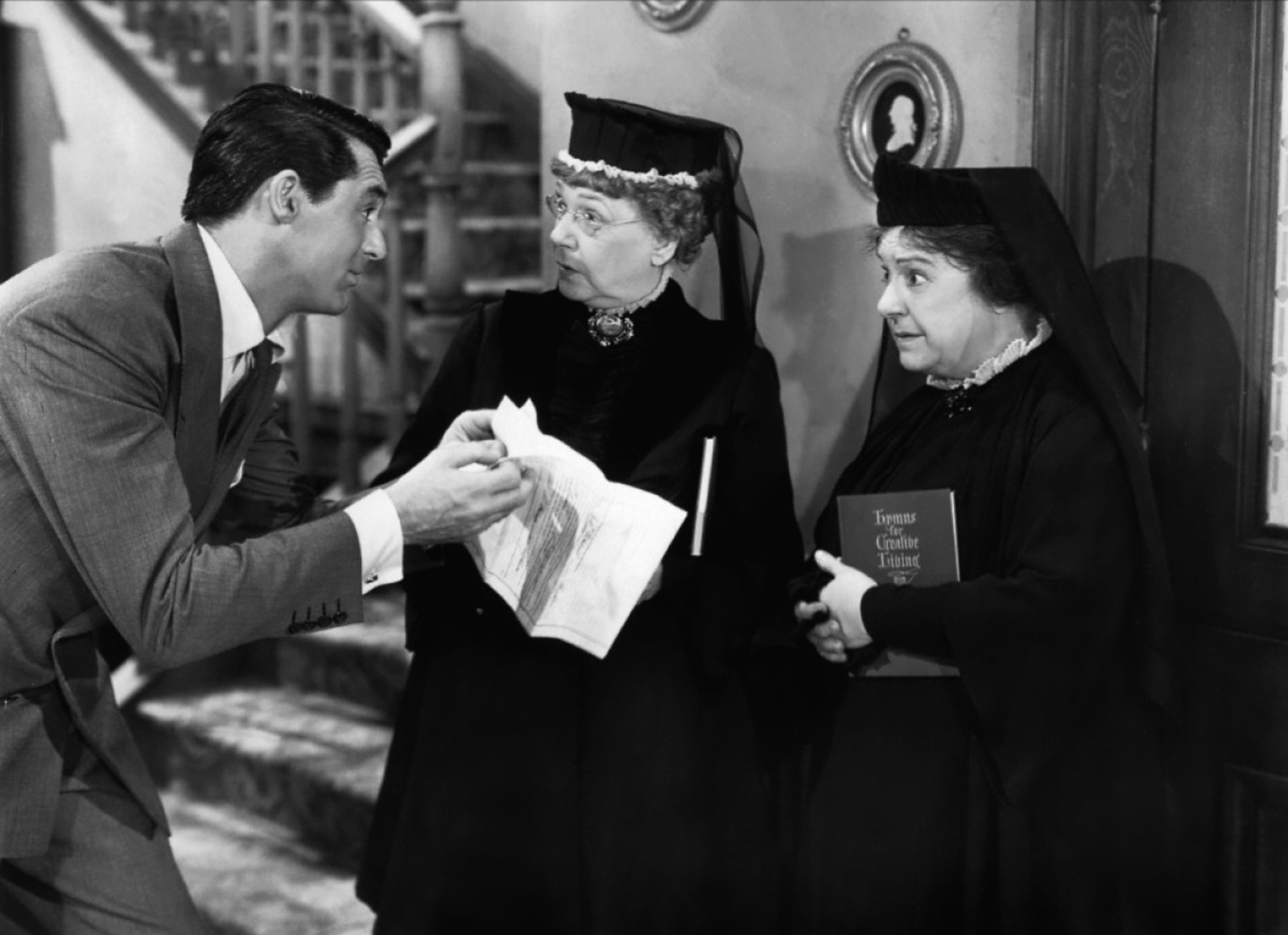
Still from Frank Capra's "Arsenic & Old Lace"
2. Funny People are easy to spot
    You  can write a great dramatic short; but the truth is you might have a hard time casting it. For one the actor has to live up the image in your head. That’s a whole different problem for another day. But finding a great dramatic actor is harder to do when you are first starting out. Your eye for judging acting isn’t completely developed yet. But casting for a comedy is much easier. Do they make you laugh? Does the rest of the crew think they are funny? This makes your job much easier. Find a few funny actors. Find funny actors is not hard they usually stand out among the other bad comedians. Put them in front of the camera and you are half way there.

Still from Judd Apatow's "40 Year Old Virgin"
3. The Laughs
    As I have been telling you film directing is a tough journey filled at beginning with a few highs and lot of lows. No matter what you do things will go wrong. You won’t have enough money, not enough time to film, and plenty of scheduling headaches. The question is do you want to obsesses over all that or maybe when you get to set you just want to start laughing. A few laughs and you’ll forget all those problems. It’s amazing how much laughs will energize a set and get you through the grind of a film shoot. These are the benefits never talked about with comedy.

Now a lot of what I said I will contradict later. But that’s because I hold comedy to a higher standard. But when you are first starting out out comedy provides you with the simples standard. Make’em laugh.

Thursday, November 10, 2011

Comedy Director-The List

So I probably should talk about comedy a little. One of my favorite things with comedy is the variety. Comedy like horror has a million little sub-genres. Part of the fun is figuring out the rules to each one of those sub genres and the little differences that come with them. Think you know them all I am going to list out a few for you. Slapstick, spoof, satire, gross-out, comedy of errors, sitcom, dark comedy, comedy of manners, black comedy, zany, teen, romance, neourotic, fish out of water, and irony.
    Now don’t get me wrong some of these genre overlap. But if you want to do great work in comedy you better study up. Learn the real differences between the genres. Comedy of errors is when evey one thinks the eletrician in the apartment is the doctor there to give a breast exam. Or the hooker is the therapist. Frasier was the master of comedy of errors. I mention this because I love Frasier but truly dislike comedy of errors. Not my cup of tea. And speaking of ta there is comedy of manners which is usually Rodney Dangerfield or some slacker at a fancy upper crust party. And to bring it around the genius of Frasier is it reversed the comedy of manners. Making it about the rich fancy guy not fitting in. Justin stop talking about Frasier.
    But see every type of comedy usually has certain archetypes and rules to follow. And you can create great comedy by taking these rules and turning them on their head. So study up and start watching all types of comedy through different era’s from silent to now. If you want a list just let me know and I will throw one up. Part of the fun is the discovery. And yes you will end up watching a lot of crappy comedies. But see that’s the key.
Randomly ALMOST good
    Crappy comedies are just films that stick closely to the formula and are predictable. Learn the formula from their failures and learn what do differently. Great comedy directors can break down a scene very quickly and what it needs to get a laugh, and what you can add to give it that extra-something. Start breaking down scenes on TV from your living so that when you get to set you can do it with ease. Want to know a great place to watch mediocre comedy, TBS. And if you want to see how the pro’s do it. Get on Netflix.

Monday, November 7, 2011

Stealing Is Not a Bad Thing

I am going to talk about a little known secret every director does. It’s called stealing. Steal, steal, steal I hate to say it but it’s a crucial part of directing. And I’m not talking about robbing banks just to be clear here. Though it would help you come up with a budget. But stealing is the key. Need a shot but don’t have the permission to be on a city street. Shoot it and get the hell out of there. Always ask forgiveness and not permission. Your producer will hate you for this, but you’re a director. It’s half expected for you to steal a shot; that is just part of life for an independent director.
 

           But actually stealing has an even more importance in a director’s career. It’s about choosing your favorite directors and films and figuring out what they do so well; and then unabashedly stealing from them. You got to dig deep and find the obscure directors who haven’t been stolen from too much and take from there. You think I am joking? You say you love Tarantino films well he’s the rip off king. His favorite director is Brian De Palma whose whole career is stealing from Hitchcock. How about Scorsese? I suggest you take a look at Fellini and Cassavettes. What about Adam McKay the director of Anchorman, Talladega Nights, Step Brothers. If you study up he’s just Cassavettes doing a Bunuel movie. Coen Brothers are the darker version of Preston Sturges.

The list goes on and on. I want to tell you this so when you are starting out and all your films look like mash notes to your favorite directors; don’t be discouraged. Everyone steals. It’s what you do with that stolen material to make it your own is what matters. As I always say “Good artists borrow. Great artists steal.” Insightful right? Yep, that’s because I stole it.
Just some food for thought!

Saturday, October 22, 2011

YOUR Budget Filmmaking


Let’s talk about no budget filmmaking. I prefer to call it your budget. At the independent especially when you are starting out as a director you wil be putting up your own money. And if you’re like me you hate to waste your own money. This to me where learning to shoot your budget film becomes crucial. It takes a while to get used to, but I’ve come up with a few handy rules on how to do this.

What does the script call for?

Hanging out between takes
I know in your vision of the script you have the couple eating a beautiful dinner eating right off the river having a conversation by the candlelight.  And you plan to crane into the scene. I know it would look amazing. I can see it. But it’s not going to happen. All that really needs to happen is for people to have a conversation over dinner. And unless the meal is important in the scene; all you really need to film is two people having a conversation. Well, there is a million cheaper ways to stage that. Perhaps at a location that is near another part of a day’s filming. I know your thinking that isn’t your job. That the producers, or A.D, or the Unit Production Manager will do. Sure, when you have a budget. But remember this is your budget filmmaking, which means you don’t have a UPM that’s your producer and why don’t you let them figure out the real problems like how you are going to pay for all this. It is your job to reign yourself in before you even get going.

I know you’re a director and you want to express your vision. Let me beat that out of you right now. Your vision better reflect your budget or else your film won’t get made. It comes down this. Your vision better fit what you have. If you expect what you have to fit your vision then expect not to work a lot. You will spend year riasing money to shoot a ten-minute film. I don’t know about you but I love directing too much to do it as a hobby.

What Do You Have?

This is important to make a list off all the things you have access to. Do you have an uncle that has a motor home that you can use as a production truck? Is your dad a janitor at a hosipital who could sneak you into a room to film? A brother that’s cop. Do you see where I am going with this? Exhaust your resources. Make that list of everything you have access to and ask everyone on your creative team to do the same. When you see what you have then start creating your vision. Where’s the art in that? Well this isn’t art this is your budge filmmaking. Art comes after. Besides limitations is freedom. One of the best early short films I did came about because my mom was able to get me access to her office for the weekend. Two milliom dollars of productuion design for free.

Kill Your Baby

That is one of my favortie film expressions. And it is never more true than on the independent your budget level. Kill your babies is that ability to give up that dream shot you had because it will cause you from shooting three other scenes that day. It’s the ability to say even though an actor is great in the role their horrendous schedule is making your producer bleed from their eyes. Guess what you are the leader and you might have to make the hard decisions for the film. I know I might be painting a bleak picture of filmmaking but it’s the truth and you know what? In the long run it’s completely worth it. Don’t like the idea of losing control over your film. Try to think of it in a biblical sense. Abraham was willing to kill his only son to appease god. Well the film is god and you better do what he says.

Wednesday, October 19, 2011

4 Things All Directors Need To Be

 
My Directing Home-Chicago
Most directors are not created they are born. Okay that sounded a little too epic. Most directors at least possess certain charateristic we all share. Directors are easy to spot early on in film school. They are the people who don’t quite fit in on a film set unless it’s their own. We are no good at setting up lights, not that organized to run a set, and or usually sitting watching the scene in progress not doing whatever task is assigned to them. We aren’t lazy just lack the ability to become really great in one area. Directors know a little about a lot, but never a lot about a litle. But here are four things you better be good at.

1.Be A Good Listener

That right there is the key. You know what directors do all day on set? Answer questions. You are never going to give correct answers unless you were really listening to the questions. Want to get great performances out of your actor’s well you be better be listening to what they need and what they are doing. Don’t want your crew to kill you after 14-hour day you best be listening them and not ordering them around.

2. Be Selfish

Yes, I am endorsing selfishness. Directing is selfish you better be okay with that. How else would you define getting twenty people to make something that is in your mind? Selfishness allows you to keep making your own films. The first thing that causes directors to fall by the wayside is that they start working on other people’s films and helping out. And guess what you are now a producer or an assistant director. I am not saying you shouldn’t help people but that selfishness is what keeps you on a path to your own films.

3. Be Likable Even Better Be Charming

You are the director. You want people to follow you. Yo are the general of the film set. And you know who people don’t want to follow in battle a poorly dressed unorganized no vision schmo. Directing is about charming people into doing what you want. Those yelling demanding directors that only goes down on major film sets where people are paid very well. You know when that director wasn’t like that; when he was first starting out. You catch more flies with honey than vinegar right. So you better have something that makes producers want to give you money and for people to bust their ass for you.

4. Be Stubborn

The last thing a director better be is a stubborn. I am not saying you shouldn’t compromise. In fact film directing is an exercise in compromise. It’s that being stubborn is what allows you to not completely cave in and still get to make your film. Perhaps the better word is persistence. Peristence is what keeps you chasing the dream. To keep bugging that producer you want till they agree to produce your next film. To keep badgering the D.P. to shoot your film even if he’s out of your league and you have no budget. And that persistance is there when every door has been slammed in your face and your still willing to keep trying to get your film made.

If all these characterisitics sound like you then you just might be a director. My condolences. There is no easy path for you but it can be a fun and rewarding adventure. Keep reading on for more things to not do and even better what you shoul do.

Sunday, October 16, 2011

An Introduction to directing

A little about myself: I am a film school graduate with a concentration in directing. What does that mean? Absolutely nothing. The only thing it shows is tenacity. At my freshman orientation they pull a couple of hundred people into a room and ask how many want to be directors. Over 95% of them raised their hands. The truth is only 5% of them will go on to graduate as directors. This teaches you the first thing you should know about directing: you have to be a persistent pain in the ass.


So now you know one thing about me; let’s get a little deeper. Treat this like a second date. I earned a negative repuatation in some circles as an actor’s director. Apparently, in some people minds, this is a bad thing. So what does an "actor’s director" mean? It means the acting comes first. It doesn’t mean you let them do anything they want. All it means is that your primary responsibiliy is to make sure the acting is great. Think of some of the classic scenes in film and the main thing you remember is the performance, the actor’s face. Now I am not trying to downplay the importance of every position because during the course of this blog I want to show how crucial every part of the crew is. But for now all you need to know is the acting comes first. And if you don’t like this idea then perhaps you aren’t a director and really should be doing something else.
I am also a director who mostly works in comedy; this will quickly make you a black sheep in the world of directing. This usually happens for two reasons. People’s initial view of comedy is it all relies on the actors. There’s that "actor’s director" thing again. And why should you do comedy when there are so many serious subjects to tackle. This is a mantra of a lot of people I have encounted. I say to that: you can say and get away with a lot more with a great joke. And who doesn’t want to go to work and get paid to laugh?
One last thing you should probably know about me is: I am a writer. Duh, Justin we are all reading your blog we know you write. But, being a writer is what defines me. I have been writing since I was four, and I schedule time every week to write. And one of the most imporant things a director needs to be is a writer. You think great scripts land on your doorstep. Nope, you got to write them yourself, or at least be able to fix a crappy one. So that’s a little about me. So I plan to pull the curtain back on directing and let you know how little we actually do and how credit we get.
It’s quite a sweet deal.